2026-01-12 17:48:52
| Table of Contents 1. Introduction: Infrastructure as the real speed 2. System Overview: Unit Network, Home Units, IMS, and Customs Gate (optional) 3. Physical Design: Pipes, Spherical Packets, Storage and Drop-Off Model
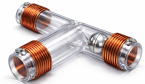
Reference Figure: Electromagnetic Coil and Spherical Packet (Concept Image) 3.1 Packet Send/Receive Terminal (Inner Sphere + Outer Shell Sphere) 3.2 Water Delivery Terminal (Dedicated Outer Shell + Direct Tank Connection) 4. Ledger (Memory) and Map (Topology) 4.0 Token-Based Reward Design and Ledger Control (Core of the Backbone Network) 4.1 Packet Identification and Tracking (Continuous Positioning and Delivery Assurance) 4.2 Congestion/Collision Avoidance via Cooperative Unit AIs (Non-Stop Operation Control) 4.3 Early Development and Simulation of Distributed Unit AI (Reachability Without Central Monitoring) 4.4 Multi-Layer Unit Placement (Layer Key) and 3D Route Expansion 5. Delivery Protocol (Consent Required) 6. Safety and Misuse Countermeasures (Hazard Blocking, Grey Isolation, Terminal Lock) 6.1 Anti-Theft: Monitoring, Detection, Evidence, Response 6.2 Evacuation Control for Abnormal Packets (Autonomous Decisions Inside Units)
7. Congestion Avoidance (Home Slots, Empty-Packet Repositioning, IMS Buffer) 8. Routing (Least-Congestion = Effective Shortest Time) and Tracking 9. Tokenomics and Governance (Investment, Rewards, Usage-Based Voting) 10. Software L1/L2 (Two-Layer Architecture) 11. No Backdoors and Open Core 12. Integrated Operator AI (Monitoring-as-Deterrence Concept) 13. Customs Gate (National Sovereignty Domain) 14. Constraints and Future Work 15. Conclusion
|
 physical internet